Few streets in Annapolis carry the visual weight that Chesapeake Avenue does. This stretch of Eastport embodies a rich maritime heritage and architectural splendor, and it’s become a corridor where century-old frame cottages sit within view of new construction commanding millions — Eastport waterfront homes with private dockage and expansive Spa Creek or Chesapeake Bay views consistently trade at premiums due to limited inventory and irreplaceable location. On a street this visible, and this proud of its identity, your driveway and walkway aren’t just functional — they’re a statement about whether your home belongs to the neighborhood’s character or fights against it. BradkappelBradkappel
This post looks at how to upgrade your hardscaping on Chesapeake Avenue (or any similarly prominent Eastport street) in a way that nods to the neighborhood’s 19th-century roots, without sacrificing the practicality and longevity that a modern poured concrete surface delivers.
Why the Approach to This Street Is Different
Chesapeake Avenue’s appeal comes specifically from the tension between old and new sitting comfortably side by side. Eastport’s residential areas have a distinctly urban feeling full of architectural diversity — Colonial-style, craftsman-style, and bungalows — many of them waterfront properties, and that diversity is precisely what makes the street work visually. A brand-new build with a stark, ultra-modern driveway can feel jarring next to a century-old frame cottage, while a historic cottage with a cracked, dated driveway apron can look neglected next to its more polished neighbors. Thetowerteam
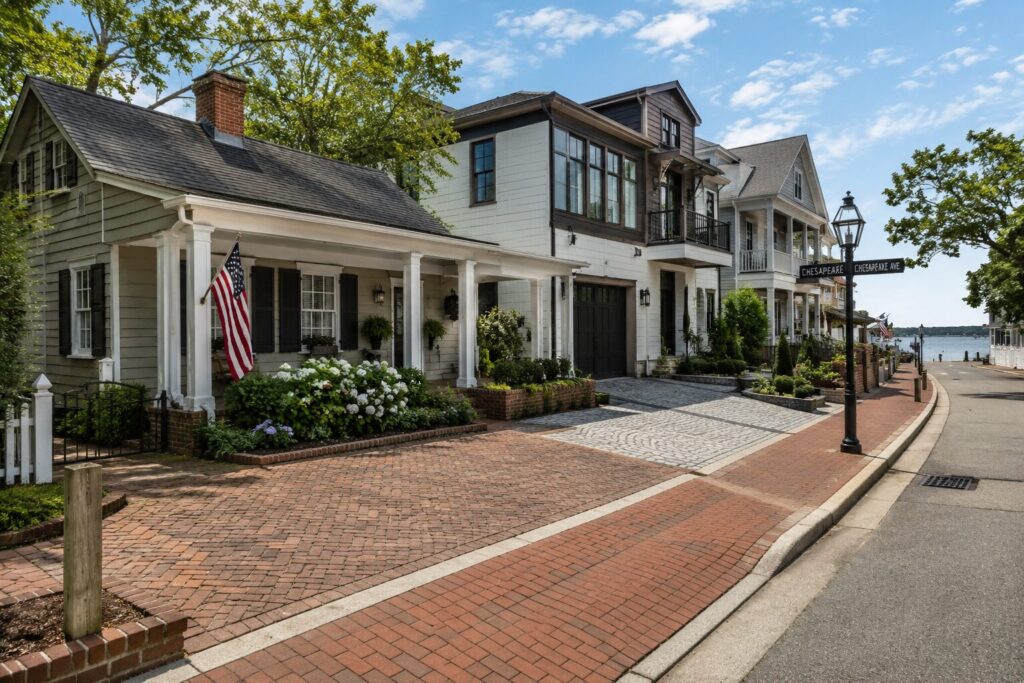
The goal for a homeowner here isn’t to make every property look identical — it’s to choose hardscaping that reads as intentional and rooted in the street’s maritime, historic character, regardless of whether the house itself is from 1920 or 2024. That’s a design challenge stamped concrete is particularly well-equipped to solve.
Brick and Cobblestone: The Patterns That Speak Eastport’s Language
Two stamped concrete patterns in particular do the heavy lifting when it comes to nodding toward Eastport’s 19th-century character: brick and cobblestone.
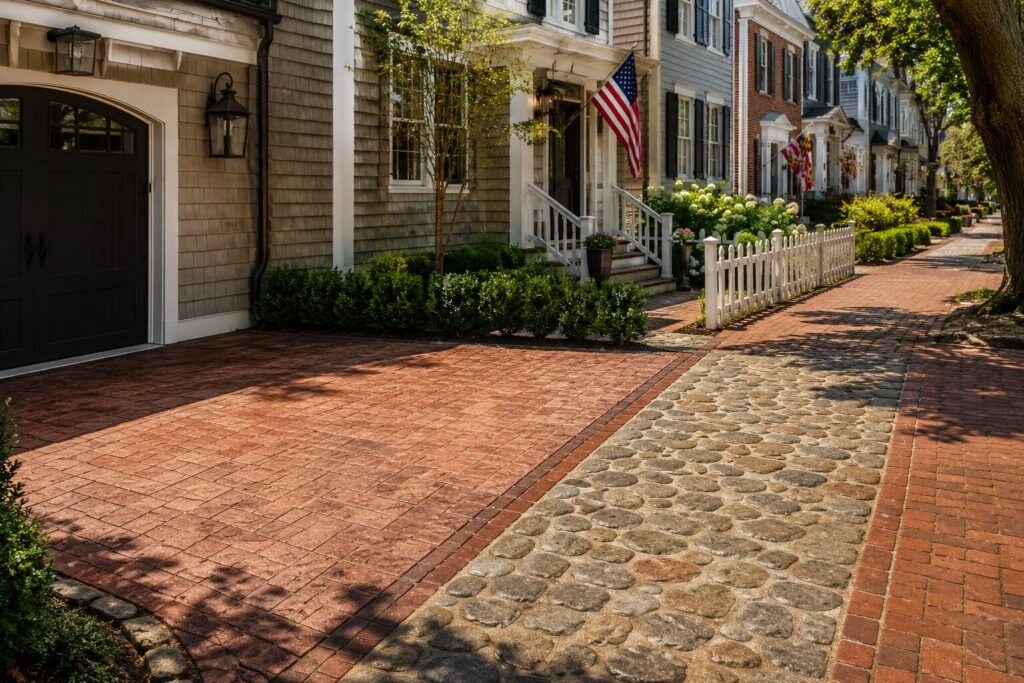
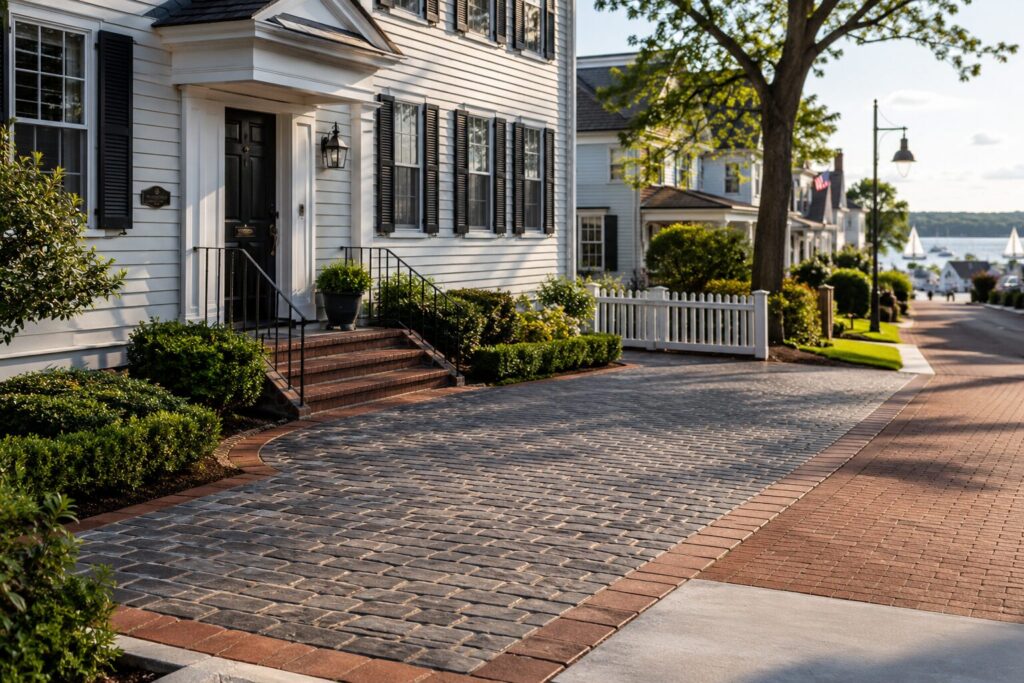
Cobblestone paths recreate the charm of old-world cobblestone streets and are ideal for enhancing the character of traditional or cottage-style homes, providing historic appeal with modern durability and lower maintenance requirements than actual reclaimed stone would demand. Brick patterns carry similar weight: brick and cobblestone are classic choices for a stamped concrete driveway, known for their uniformity and charm, making them ideal for traditional or historic-style homes. Bethel Custom BrickConcretesolutionsofatl
Color plays as large a role as pattern in getting this right. Pairing a brick pattern with red or terracotta tones replicates the look of genuine brick, a combination that echoes the brick sidewalks and historic building material found throughout Annapolis’s older neighborhoods without requiring the maintenance burden of actual clay brick pavers. Bethel Custom Brick
The Border Treatment That Elevates the Whole Property
One of the most effective — and most underused — design moves for a historic-adjacent home is treating the driveway apron and border differently from the main drive surface, rather than pouring the whole thing as one uniform slab.
Using a tighter, more refined stamp pattern in the center drive lane and a complementary border at the edges visually narrows a wide drive, creates a “runway” effect, and makes the arrival feel intentional rather than purely utilitarian. For a Chesapeake Avenue property, that might mean a subtler broom-finished or seamless-texture main surface paired with a cobblestone or brick-pattern soldier-course border — giving the eye a historic reference point without turning the entire driveway into an overwhelming pattern. Resident
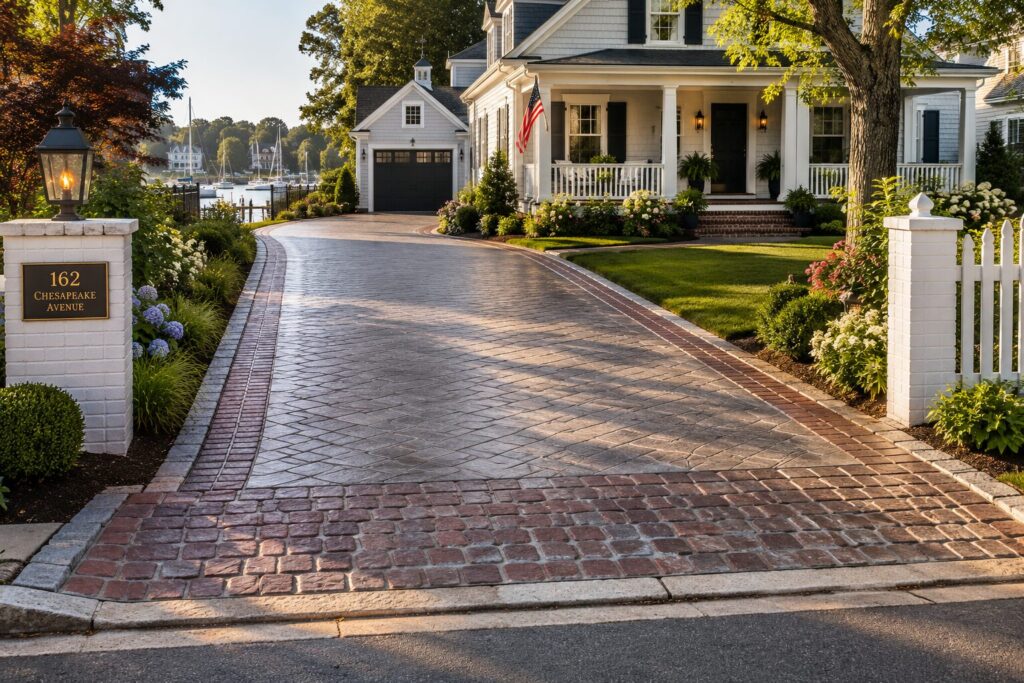
This border-and-field approach has become a defined design category in its own right. Stamped concrete can add subtle beauty when used as a decorative border to frame a driveway and complement its surroundings, and for homeowners who favor simpler designs, a broom-finished surface can be paired with stamped borders and bands for an intriguing accent. Design guides specifically recommend this pairing for character-driven properties: a stamped border that contrasts with the central design creates a polished, finished look, and popular choices include brick-style borders that define the space and give it that finished appearance homeowners on a street like this are looking for. Concrete Craft + 2
The driveway apron specifically — the transitional stretch where your driveway meets the street — deserves particular attention on a highly visible corridor. Because it’s located at the entrance to your property, the apron is highly visible and can enhance your home’s curb appeal when well-designed, and a beautifully designed apron boosts a home’s visual appeal and creates a welcoming first impression before a visitor even reaches the front walk. Concrete NetworkCbctwincities
Historic Character Without Sacrificing Durability
The appeal of achieving this look in stamped concrete, rather than actual brick or reclaimed cobblestone, comes down to a straightforward tradeoff most homeowners are happy to make once they understand it: nearly identical visual character, at a fraction of the long-term maintenance.
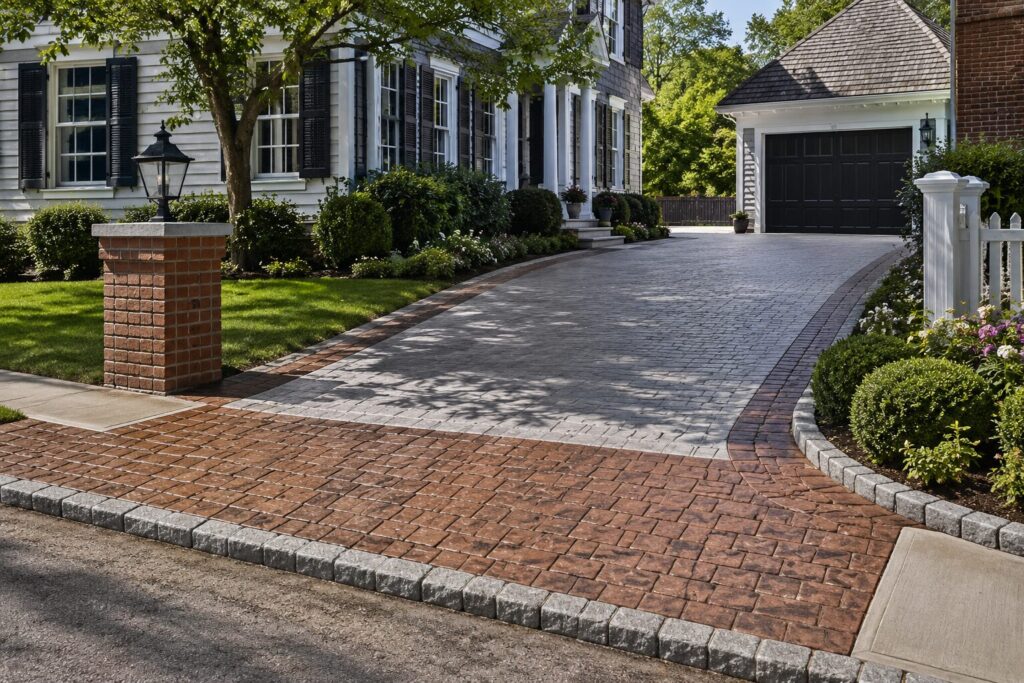
Stamped aprons are more durable than traditional brick or stone while providing the same decorative appeal, and the cost difference is significant enough to matter for a full-property upgrade: stamped concrete lets homeowners achieve a stylish, high-end look without the high-end cost of materials like actual brick or stone. That’s a meaningful consideration on a street where property values already run high — it means the budget saved on materials can go toward other visible upgrades, like landscaping or exterior lighting, rather than the driveway alone. ConcretesolutionsofatlCbctwincities
For homeowners who prefer genuine stone edging rather than a stamped pattern for the border specifically, natural materials remain a strong complementary option. Granite edging keeps asphalt or concrete from fraying at the edges, protects the apron where cars turn hardest, and gives the front of the home a calm, intentional frame — and split-face blocks carry a rough, historic feel, while sawn-top blocks lean more tailored and contemporary, giving homeowners flexibility in exactly how “old” or “polished” they want that edge treatment to read. ChiefbricksChiefbricks
A Note on Historic District Guidelines
If your Chesapeake Avenue property falls within Annapolis’s designated historic district boundaries, it’s worth confirming what design review process applies before finalizing plans. Annapolis Historic District guidelines and State Historic Preservation Office requirements are a standard part of renovation projects in these areas, and waterfront properties in Eastport specifically require an understanding of Critical Area regulations that govern construction within 1,000 feet of the Chesapeake Bay and its tidal tributaries. A contractor with direct experience navigating these requirements for Eastport properties can save considerable time and headaches compared to discovering a review requirement mid-project. Fortune Homes MDFortune Homes MD
Making Your Property Feel Like It Belongs
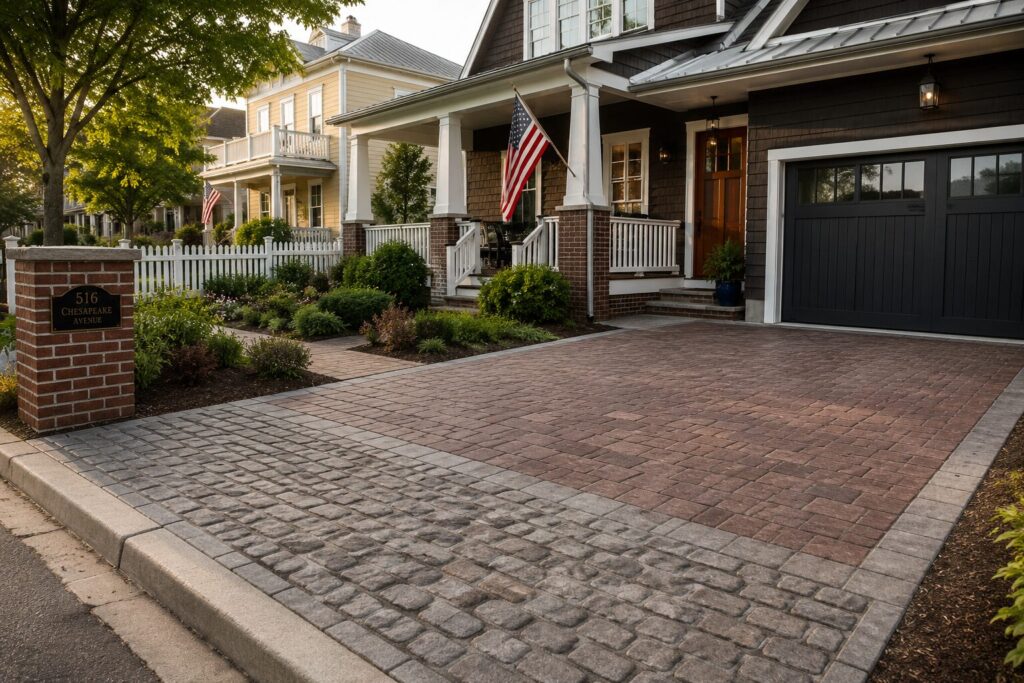
On a street as visible and as proud of its character as Chesapeake Avenue, hardscaping isn’t just about function — it’s part of how your home reads to every neighbor, dog-walker, and visitor who passes by. A well-chosen brick or cobblestone stamped pattern, paired with a thoughtful border treatment, gives a property genuine historic character and lasting curb appeal, whether the house itself is a century-old cottage or a brand-new build settling into the neighborhood.
Maryland Curbscape is a locally owned, full-service concrete company based in Annapolis, with direct experience designing driveways and walkways that match Eastport’s historic character — from Chesapeake Avenue cottages to newer waterfront construction. We’ll help you choose the pattern, color, and border treatment that fits your specific property and street.
📞 Call 443-623-2068 to schedule your estimate and design consultation
📍 518 Tremont Circle, Annapolis, MD 21409
🔗 Contact Maryland Curbscape to get started online
Frequently Asked Questions
Why does Chesapeake Avenue specifically call for a different design approach than other streets?
Because of the visible contrast between historic and new construction along it. Eastport’s residential areas have a distinctly urban feeling full of architectural diversity — Colonial-style, craftsman-style, and bungalows — many of them waterfront properties, which means a driveway or walkway on this street reads against a backdrop of both century-old cottages and brand-new builds. Choosing hardscaping that nods to the street’s maritime, historic character helps a property feel intentional rather than out of place, regardless of the home’s actual age. Thetowerteam
Which stamped concrete patterns best match Eastport’s historic character?
Brick and cobblestone patterns are the strongest fit. Brick and cobblestone are classic choices for a stamped concrete driveway, known for their uniformity and charm, making them ideal for traditional or historic-style homes, and cobblestone paths specifically recreate the charm of old-world cobblestone streets, providing historic appeal with modern durability and lower maintenance requirements than the genuine material. ConcretesolutionsofatlBethel Custom Brick
What color should I choose for a brick-pattern stamped driveway?
Pairing a brick pattern with red or terracotta tones replicates the look of genuine brick, which echoes the brick sidewalks and building material found throughout Annapolis’s historic core without the long-term upkeep that actual clay brick requires. Bethel Custom Brick
Should my entire driveway be one pattern, or is mixing patterns a good idea?
Mixing a simpler main surface with a more decorative border is often the more effective approach. Using a tighter, more refined stamp pattern in the center drive lane and a complementary border at the edges visually narrows a wide drive, creates a “runway” effect, and makes the arrival feel intentional rather than purely utilitarian. For homeowners who favor simpler designs, a broom-finished surface can be paired with stamped borders and bands for an intriguing accent rather than committing the whole driveway to one busy pattern. ResidentConcrete Craft
Why does the driveway apron matter so much for curb appeal specifically?
Because it’s the first thing anyone sees when they arrive at your property. Because it’s located at the entrance to your property, the apron is highly visible and can enhance your home’s curb appeal when well-designed, and a beautifully designed apron boosts a home’s visual appeal and creates a welcoming first impression before a visitor even reaches your front walk. Concrete NetworkCbctwincities
Is stamped concrete really as durable as actual brick or cobblestone?
In most respects, it holds up better with less maintenance. Stamped aprons are more durable than traditional brick or stone while providing the same decorative appeal, and the cost advantage is significant: stamped concrete lets homeowners achieve a stylish, high-end look without the high-end cost of materials like actual brick or stone. ConcretesolutionsofatlCbctwincities
If I want a genuine stone border instead of a stamped one, what’s a good option?
Granite edging is a popular and durable choice for framing a driveway with real stone. Granite edging keeps asphalt or concrete from fraying at the edges, protects the apron where cars turn hardest, and gives the front of the home a calm, intentional frame. You also have flexibility in how historic or modern it reads: split-face blocks carry a rough, historic feel, while sawn-top blocks lean more tailored and contemporary. ChiefbricksChiefbricks
Does my property need to match my neighbors’ style exactly?
No — the goal is complementary character, not uniformity. Eastport’s appeal comes specifically from architectural diversity sitting comfortably together. A well-chosen pattern and color palette should feel intentional and rooted in the street’s character, whether your home is a historic cottage or a newer build — it doesn’t need to replicate any single neighboring property.
Do I need historic district approval before upgrading my driveway on Chesapeake Avenue?
It depends on whether your specific property falls within Annapolis’s designated historic district boundaries. Annapolis Historic District guidelines and State Historic Preservation Office requirements are a standard part of renovation projects in these areas, so it’s worth confirming your property’s status before finalizing plans. A contractor with direct Eastport experience can help you navigate this quickly. Fortune Homes MD
Are there additional regulations for waterfront properties near the Bay?
Yes. Waterfront properties in Eastport specifically require an understanding of Critical Area regulations that govern construction within 1,000 feet of the Chesapeake Bay and its tidal tributaries, which can affect what’s permitted for driveway, walkway, or patio work close to the water. This is another area where local contractor experience matters more than it would for an inland property. Fortune Homes MD
Planning a driveway or walkway upgrade on Chesapeake Avenue or elsewhere in Eastport? Call Maryland Curbscape at 443-623-2068, visit us at 518 Tremont Circle, Annapolis, MD 21409, or contact us online to schedule a design consultation.
Sources cited:
- Brad Kappel Team — 712 Chesapeake Avenue, Eastport Character and Charm
- Brad Kappel Team — Downtown Annapolis & Eastport Real Estate Neighborhood Guide
- The Tower Team — Annapolis Waterfront Real Estate: Living the Chesapeake Bay Lifestyle
- Fortune Homes MD — Annapolis
- Resident.com — How Driveway Concrete Stamps Turn Curb Appeal Into a Design Statement
- Concrete Network — Concrete Driveway Apron Ideas to Make Your Home Stand Out
- Concrete Solutions of ATL — Ideas for Your Stamped Concrete Driveway
- Christian Brothers Concrete — Top Trends in Stamped Concrete Driveway Aprons
- Bethel Custom Brick — Design Ideas for Stamped Concrete Patios
- Concrete Craft — Stamped Concrete Driveways
- Chief Bricks — Styles of Driveway Edging & Aprons with Granite Belgian Blocks