We install four concrete curbing profiles — slant, mower, 6×4 rectangular, and 6×6 commercial. The right choice depends less on taste than on what the curb needs to do, where it will be seen, and how you maintain the surrounding lawn.
Slant
Best for: high-visibility beds and decorative borders
Stamping: excellent
Mower
Best for: lawn edges and less trimming
Stamping: partial
Rectangular 6×4
Best for: larger properties and long runs
Stamping: good
Commercial 6×6
Best for: parking areas and architect-specified work
Stamping: not typically
Four questions that settle it
Do you trim along your beds every week, and resent it? Mower style. It’s the profile built to reduce that job.
Is the curb a visible part of the landscape design? Slant. It’s the profile that carries a stamped pattern properly.
Do you have a large property, or long uninterrupted bed runs? 6×4 rectangular.
Are you working from plans or specifications? 6×6 commercial, in gray, unless the drawing says otherwise.
If the answer to the first two is “both” — a front bed you also mow around — many homeowners run slant along the visible front and mower style along the lawn-side runs. There’s no rule requiring a single profile across a whole property.
Slant style is the default for a reason
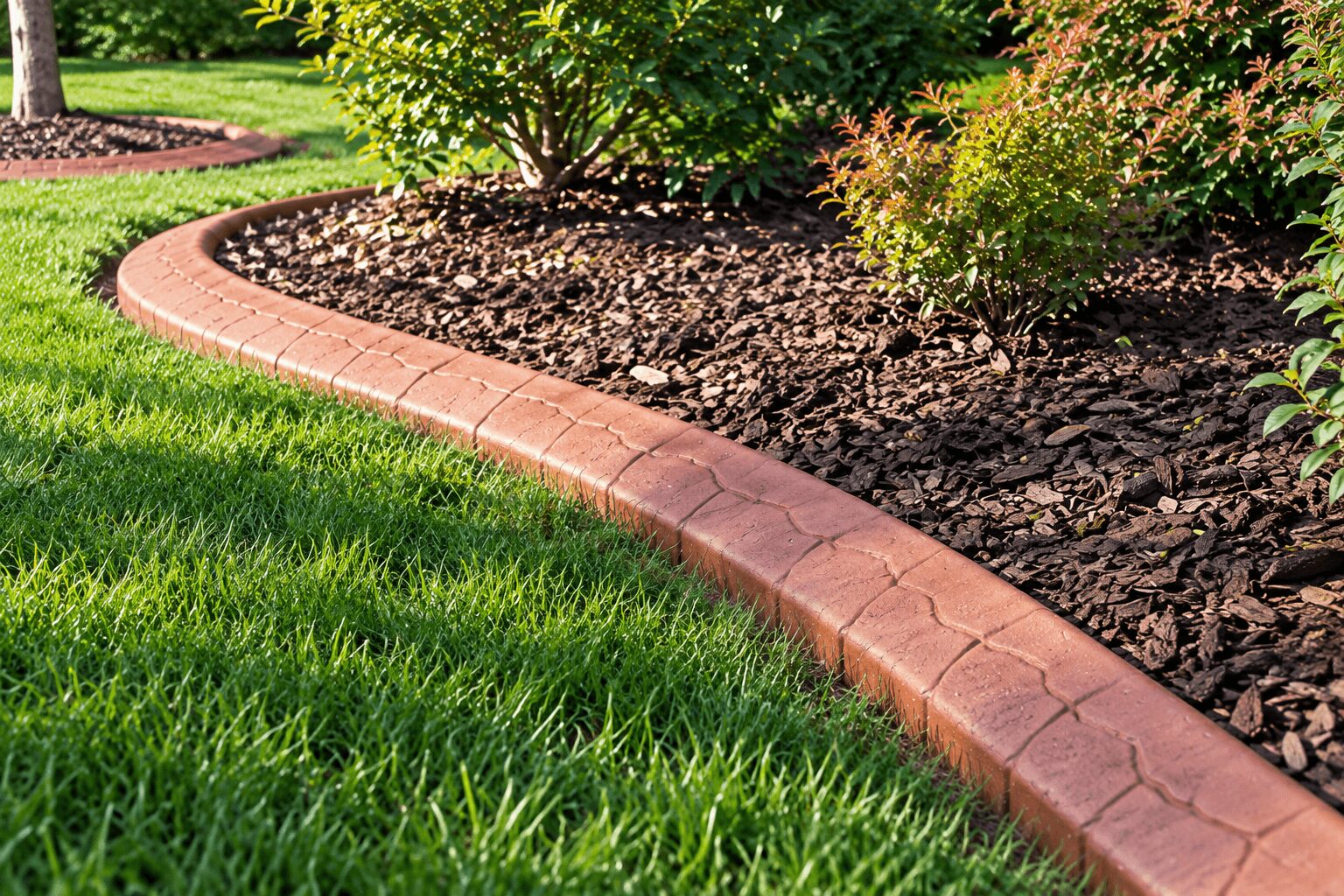
Slant is our most popular profile, and the one to start with if you’re edging a bed people see from the road. The face leans back rather than standing straight up, so it catches light across its full surface — which is why it carries stamped and textured patterns better than any other profile. A brick or slate texture on a vertical face reads as a thin stripe. On a slanted face it reads as the pattern it’s meant to be.
The angled face also tends to shed leaves and debris instead of letting them collect against a vertical edge, which can make seasonal cleanup easier.
The trade-off: a slant curb is not a mowing surface. You’ll still run a trimmer along it a few times a season.
Mower style cuts down the trimming
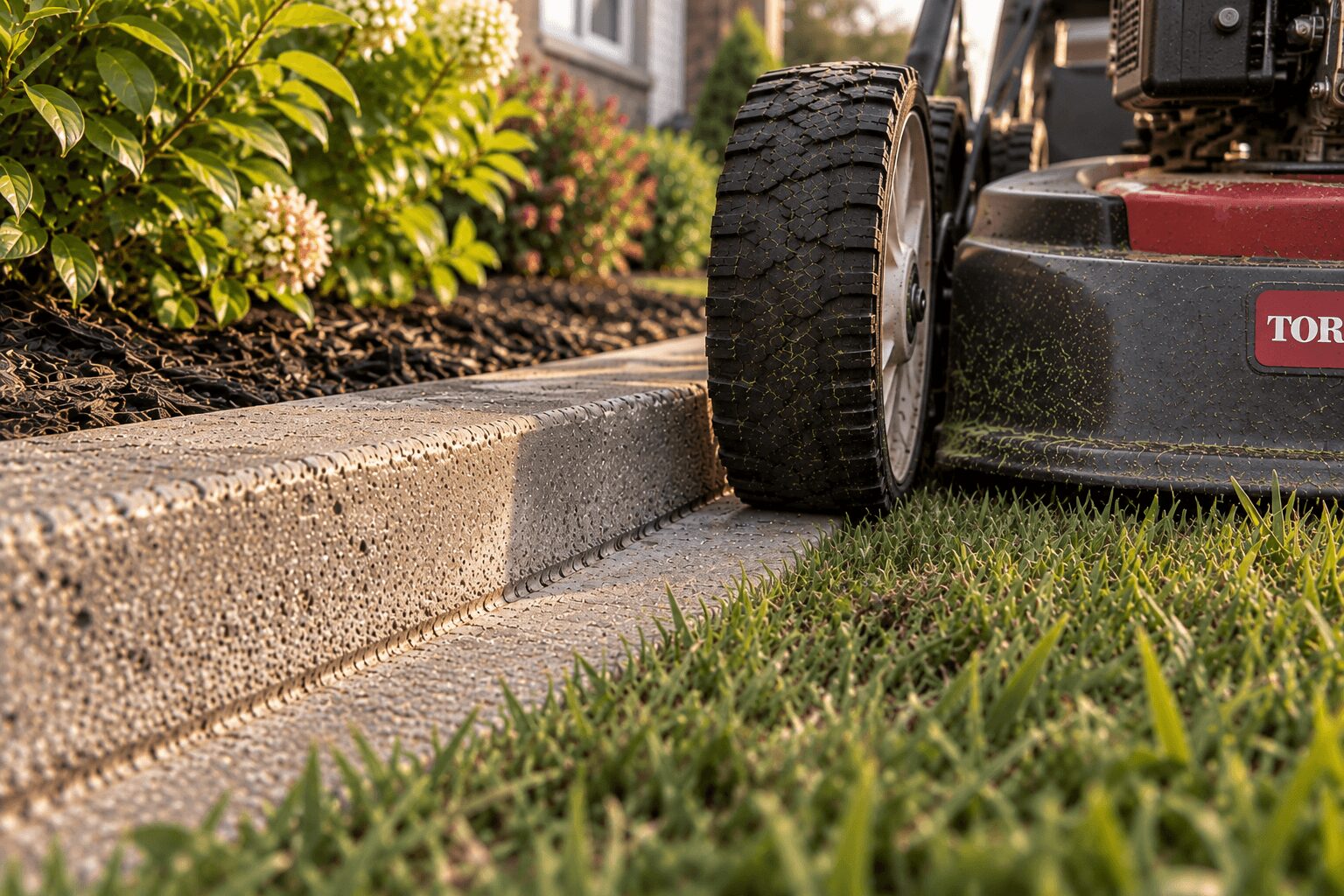
Mower style is a two-tier shape — a raised edge on the bed side, with a flat apron sitting at lawn level. The apron is meant to carry your mower wheel, so you can mow right up to the bed and the blade clears the edge, greatly reducing the hand-trimming afterward. Slopes, tight curves and corners will still need occasional touch-up.
If the reason you’re looking at curbing in the first place is that you’re tired of maintaining the boundary between lawn and bed, this is the profile that solves the actual problem.
It’s a more assertive look than slant, and it shows texture on the raised portion, though less of it than a slant face.
Rectangular 6×4 suits larger properties
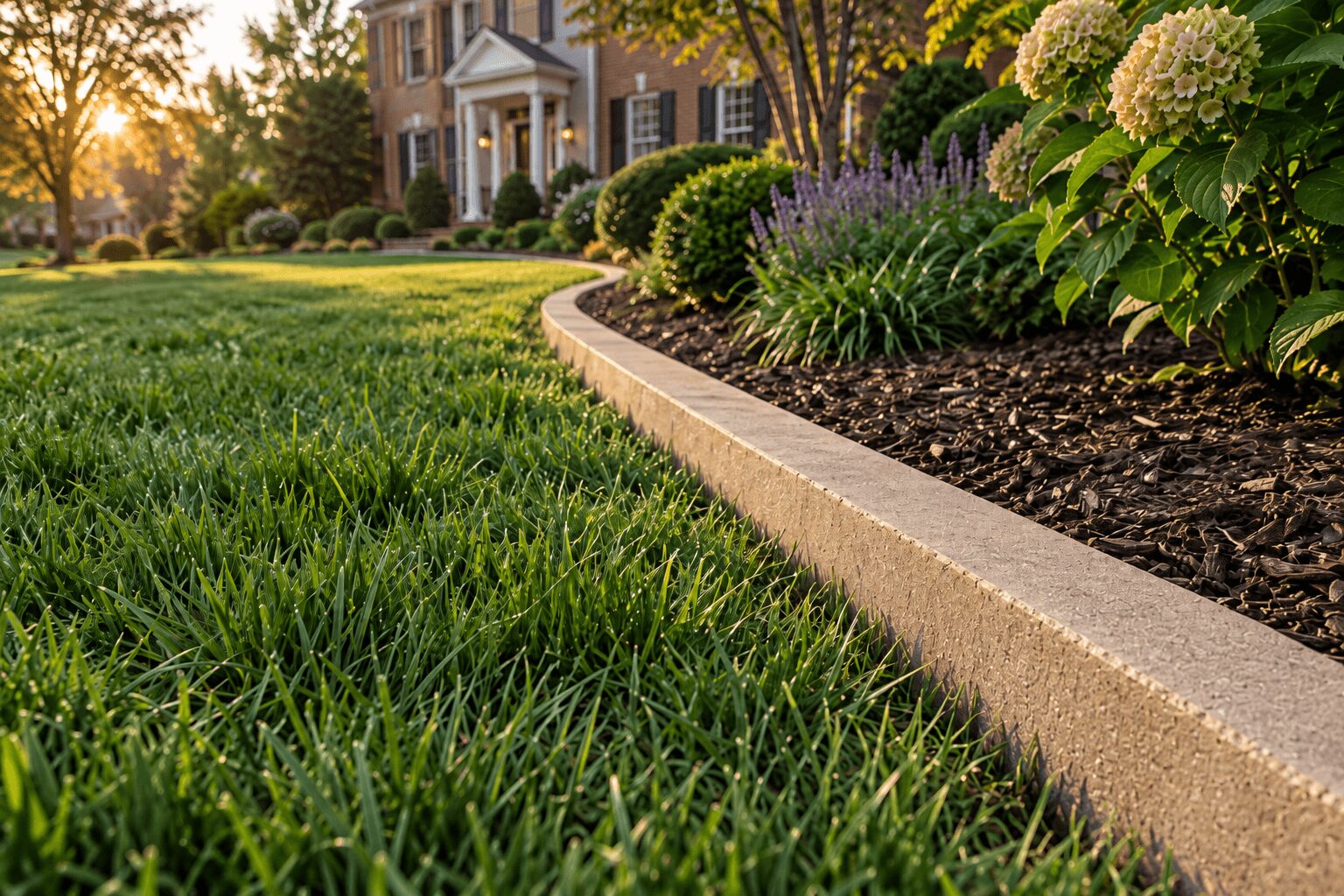
The 6×4 rectangular profile is straight-sided: six inches across and four inches tall. On a small front bed, that wider profile can feel heavy. On a larger property with long bed lines, though, the proportions make more sense. A border running sixty or eighty feet needs enough visual presence to hold its own against a larger lawn, wider planting beds and the scale of the house. The 6×4 profile gives those longer runs a substantial, defined edge without relying on the more decorative look of a slanted face.
Commercial 6×6 is the spec, not a style choice
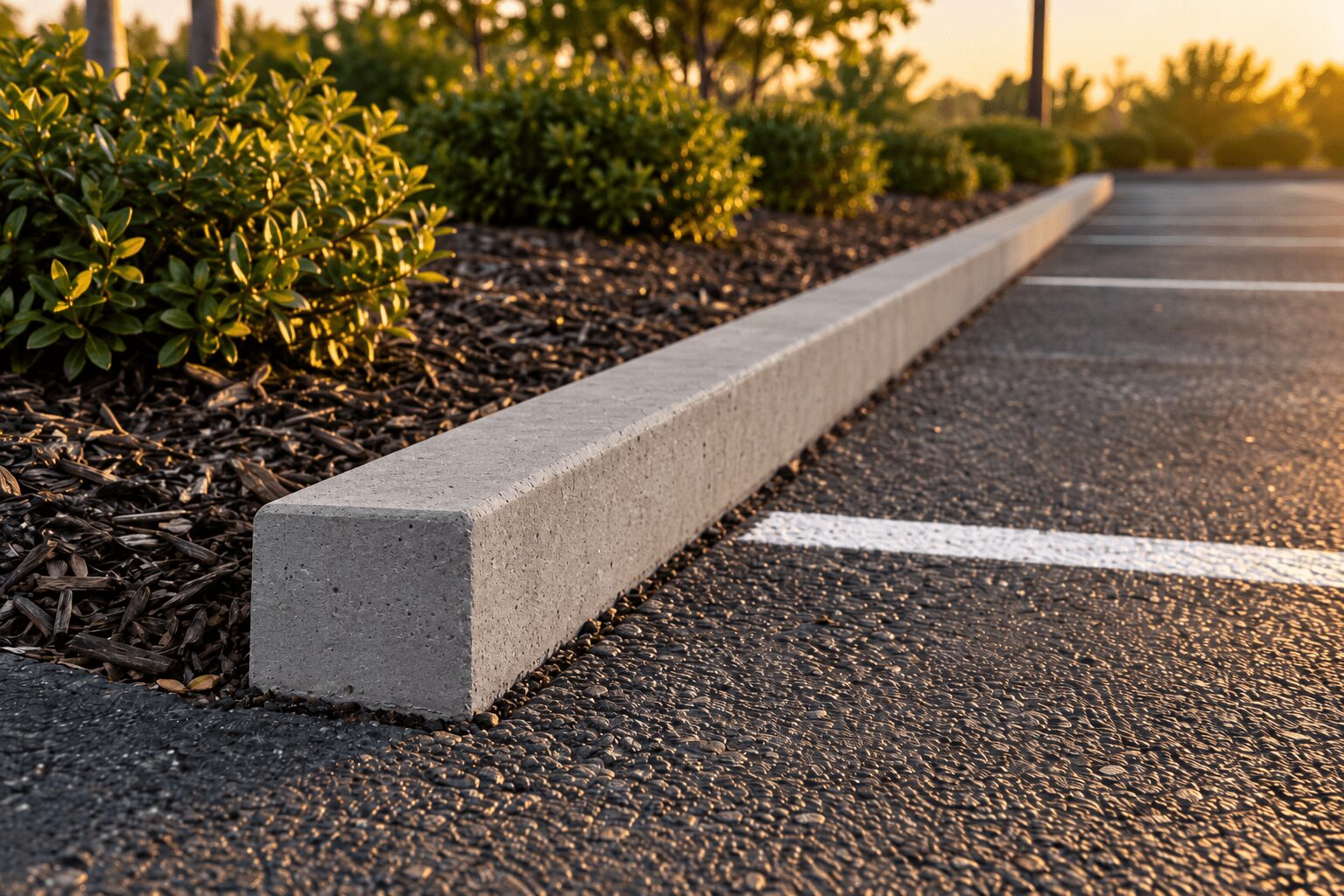
The 6×6 commercial curb is gray, straight-sided and six inches in both directions — the dimension architects and commercial contractors typically specify for separating a parking area from a planted island. It’s poured plain rather than stamped, because its job is functional rather than decorative. If you’re a homeowner you almost certainly don’t want it. If you’re a property manager, an HOA board handling common-area work, or a contractor working from plans, it’s the profile that will match the drawing.
Color and pattern are separate decisions from profile
Once you’ve settled the profile, you’re choosing from over 40 colors and 15 stamp and texture patterns — brick, stone, slate, rock and wood — applied to the wet concrete during the pour.
The profile limits the pattern, not the other way around. A detailed brick pattern needs a face broad enough to show a full course. A slant face will carry it; on a mower profile’s raised tier, a finer texture like slate usually reads better.
Match the house, not the mulch. Mulch gets replaced and changes color every year. The brick, siding or stone on the house doesn’t. Pick a color against this spring’s mulch and you’ll likely be unhappy with it by next spring. Pull it from the house’s masonry or trim and it will still look right in ten years.
If your neighborhood has an HOA, colors and finishes are the part they’re most likely to have an opinion about. Our HOA post covers what’s typically allowed in Anne Arundel communities.
What the install actually involves
Installation is less invasive than most homeowners expect. We cut a shallow trench along the bed line, mix and extrude the concrete on site, and place control joints every 4 feet to help manage normal movement as the concrete cures and temperatures change. Most residential properties are completed in a day, with sealer applied during installation, and the curb should be re-sealed every two to three years to keep the color and texture from dulling.
See the profiles in person
Photographs only get you so far with a profile decision, because the thing you’re judging is how a shape catches light. We’ll bring samples of all four profiles, the color deck and the pattern samples to your property, set them against your house and your existing beds, and walk the bed lines with you.
Request a consultation and we’ll schedule a visit. We serve Annapolis and the surrounding Anne Arundel County communities.