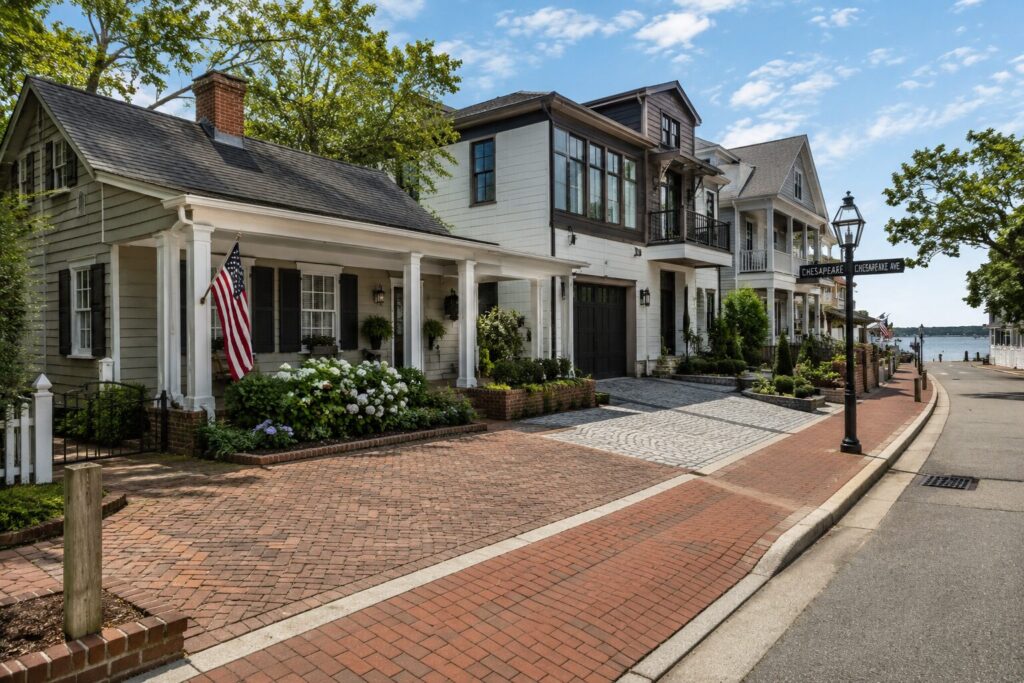
Few parts of Annapolis mix old and new the way Eastport does. On streets like Chesapeake Avenue, Severn Avenue, and the blocks around Spa Creek, century-old frame cottages sit next to new waterfront construction, and the whole neighborhood works because neither one apologizes for the other.
That mix makes the driveway and front walk more visible than they would be in a newer subdivision. A stark, modern slab in front of a 1920s cottage looks out of place. A cracked, sunken apron in front of a new build looks neglected. The goal is a surface that reads as intentional and rooted in the street, whether the house behind it is from 1920 or 2024, and that is a problem stamped concrete solves well.
Here is how we approach a stamped concrete driveway or walkway for a historic-feeling Annapolis property: pattern, color, borders, durability, and the rules that apply close to the water.
Brick and cobblestone: the patterns that belong here
Two patterns do most of the work on older Annapolis streets.
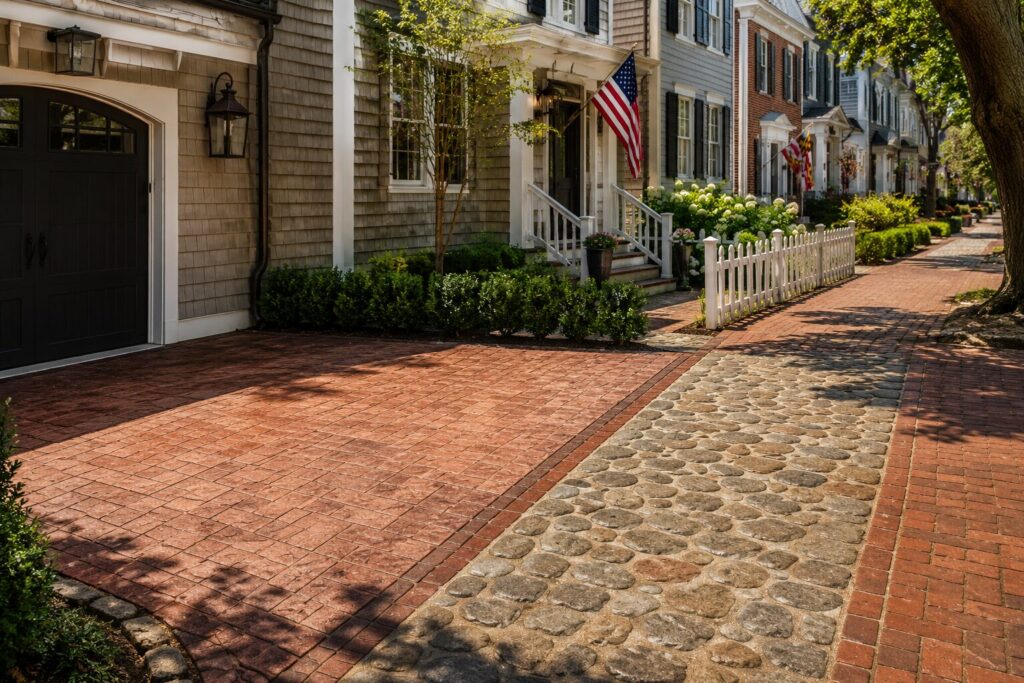
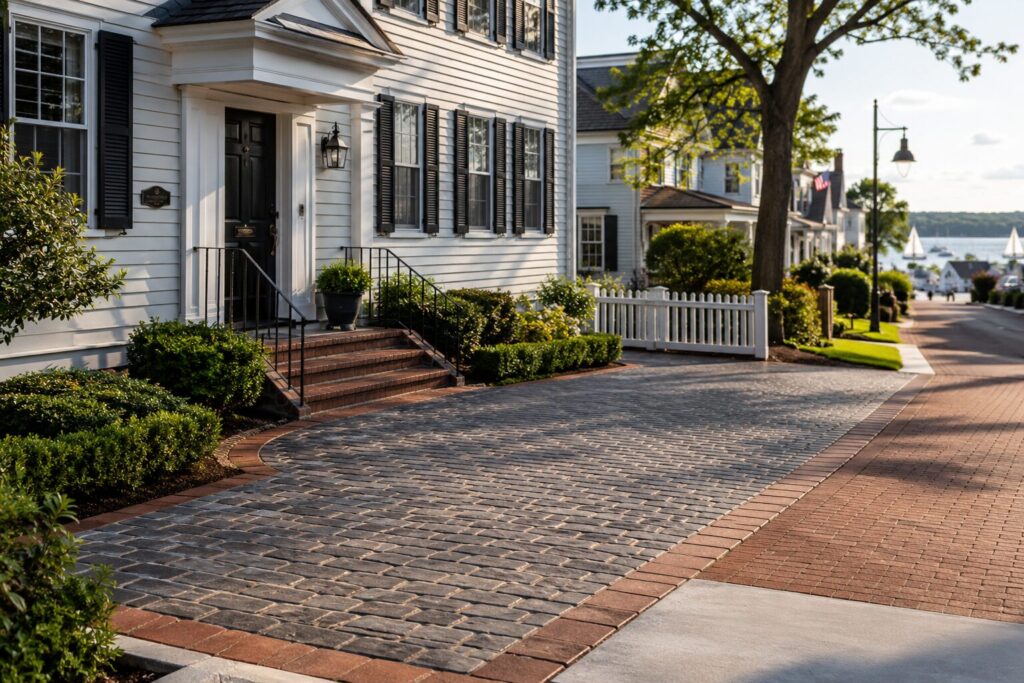
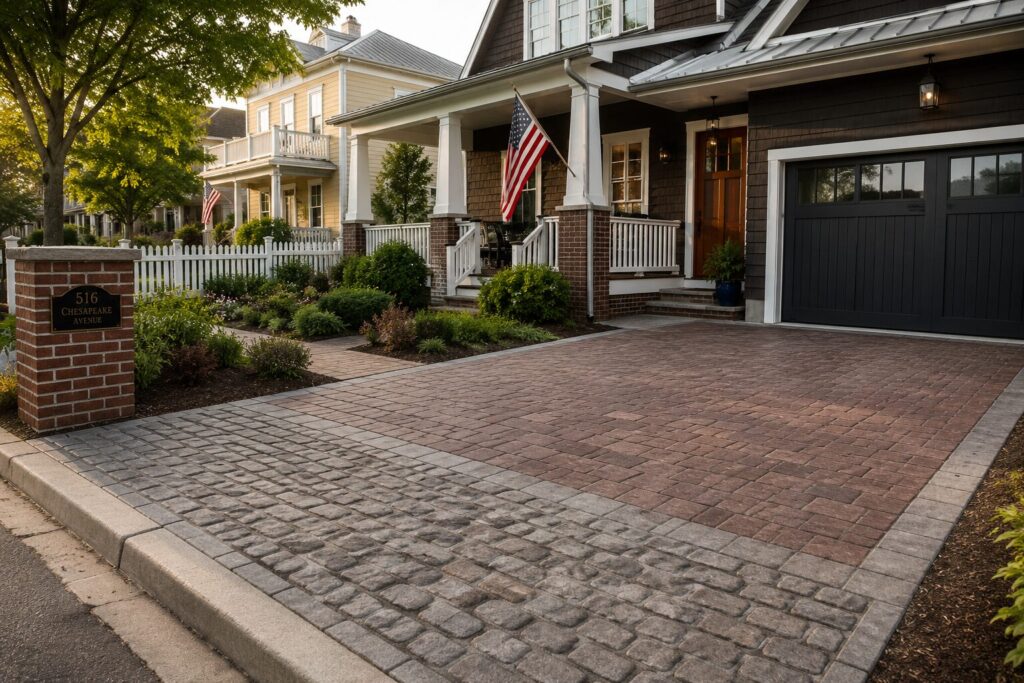
Cobblestone recalls the look of old harbor streets and suits cottage and bungalow architecture. The stamp gives you the rounded, irregular texture without the loose, uneven surface of real set stone.
Brick is the more formal option and the one that ties most directly to the city. Annapolis has brick sidewalks and brick buildings throughout its older neighborhoods, so a brick-pattern driveway in a red or terracotta tone reads as native to the place rather than imported. Running bond and herringbone are the two layouts we use most on driveways; herringbone looks richer but costs more to stamp.
Both patterns are shown, with the others we offer, in our stamped concrete pattern guide.
Color matters as much as pattern
The pattern gives the shape; the color sells it. For a brick pattern, red and terracotta base colors with a darker release agent in the joints look the most like laid brick. For cobblestone, warm grays and tans with a charcoal release read as weathered stone.
We use integral color, meaning the pigment is mixed into the concrete rather than applied on top, so the color runs through the full slab and cannot wear off. Weathering and an aging sealer can make a surface look lighter over time; routine cleaning and resealing bring it back. Before you commit, ask to see a finished driveway in the color and pattern you are considering, in person if possible. Color chips do not show how a sealer changes the look.
The border is where the design happens
The single most effective move on a historic-adjacent property is to treat the border and apron differently from the main drive surface rather than stamping the whole thing as one pattern.
A common pairing: a broom-finished or lightly textured main field, with a brick or cobblestone soldier-course border along the edges and a stamped apron where the driveway meets the street. The border frames the driveway and gives the eye a historic reference without turning the whole surface into a pattern, and it visually narrows a wide drive so the arrival feels deliberate.Resident
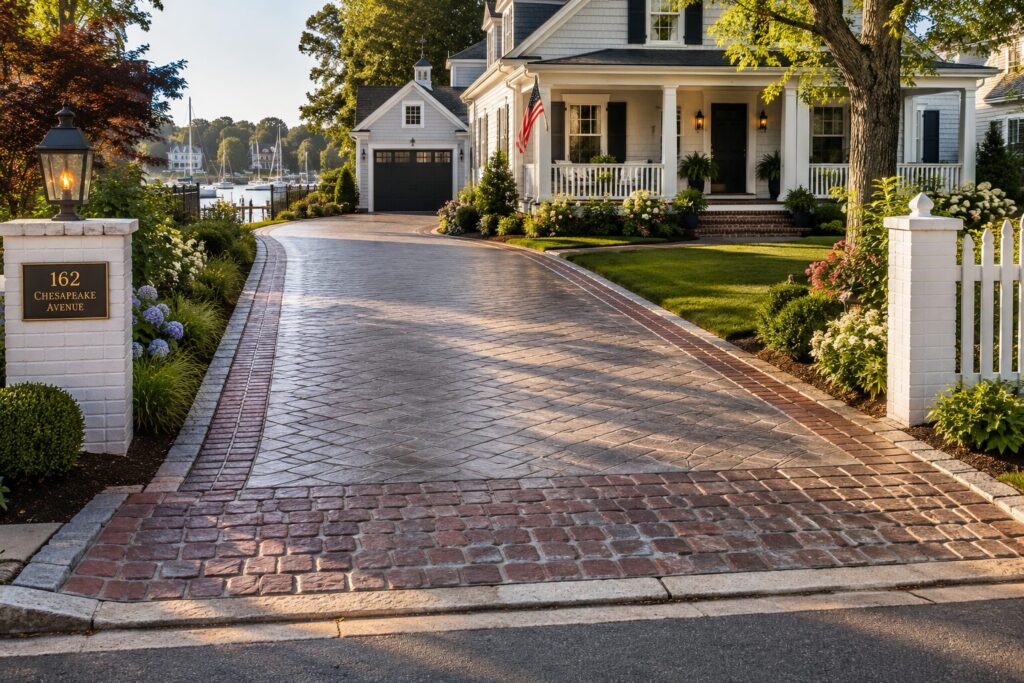
The apron deserves the most attention because it is the part every passerby sees. On a narrow Eastport lot, the apron may be the only part of the driveway visible from the sidewalk. Our post on brick borders, banding, and inlays shows how these combinations look on patios, and the same ideas carry to a driveway.
Historic character, concrete durability
The reason to get this look in stamped concrete rather than real brick or cobbles comes down to maintenance. Laid brick and set stone have hundreds of joints that weeds find, that sand washes out of, and that heave individually when the ground freezes. A stamped concrete driveway is one slab with a pattern pressed into it: the joints are texture, not gaps. It needs cleaning and periodic resealing, and that is the maintenance list.
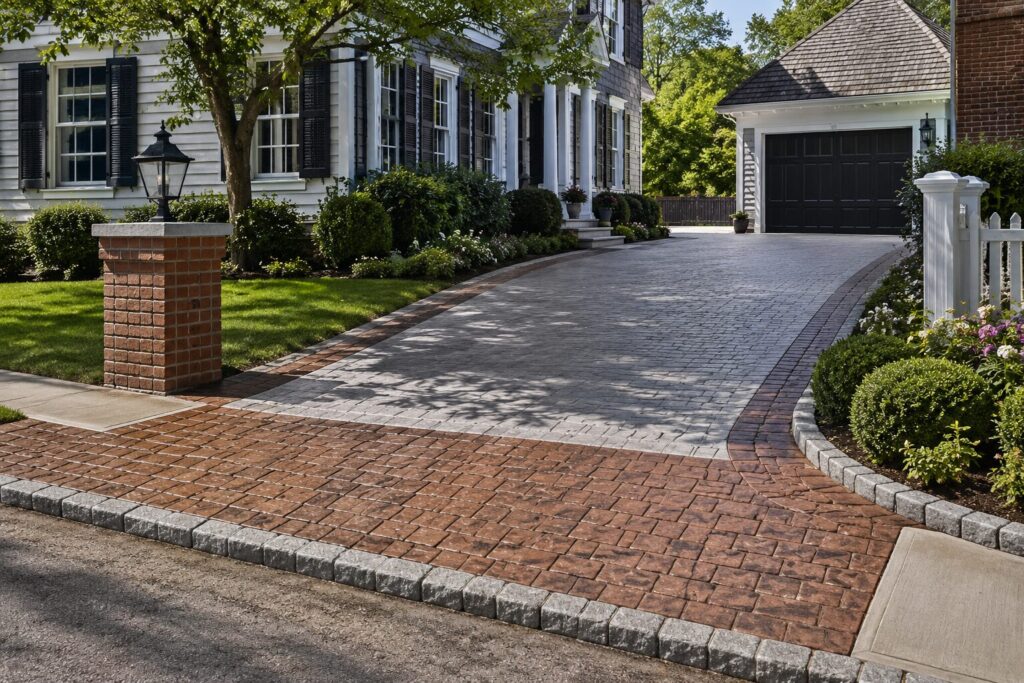
It is also a real concrete driveway underneath. Base preparation, control joints, and curing are the same as any other slab, and the one-year warranty is the same. Expect a hairline crack eventually; that is how concrete behaves, and it is cosmetic, not structural. We add a slip-resistant additive to the sealer on our stamped work, which matters on a surface that is wet half the year.
If your current driveway is asphalt, the project starts with removal. Our guide to replacing an asphalt driveway with concrete covers what happens between tear-out and the new pour.
What applies near the water
Two sets of rules come up on Eastport projects, and it helps to know which one is which.
Historic district review. The City of Annapolis Historic District is the colonial core across Spa Creek; its boundary runs along the creek, so most Eastport properties sit outside it and are not subject to Historic Preservation Commission design review. If you are unsure about your address, the City’s Planning and Zoning Department can confirm in a phone call.
Critical Area rules. These are the ones that apply. Eastport is a peninsula, and most lots are within 1,000 feet of tidal water, which puts them in Maryland’s Chesapeake Bay Critical Area. That can limit how much impervious surface a lot may add, and a new or wider driveway counts. Our concrete permit guide for Anne Arundel County explains the thresholds. Raise the lot’s current coverage during the estimate so the layout is designed around it rather than discovered mid-project.
A driveway that looks like it belongs
On a street where everyone walks, the driveway is part of how your house reads to the neighborhood. A brick or cobblestone stamp, the right color, and a considered border give a property genuine historic character with none of the upkeep of the real materials, whether the house behind it is a century-old cottage or a brand-new build settling in.
Maryland Curbscape is a locally owned concrete contractor based in Annapolis. We install stamped concrete and standard concrete driveways, walkways, steps, and patios across Anne Arundel County, including Eastport, Annapolis, Severna Park, Arnold, Millersville, Pasadena, and Glen Burnie, and in Columbia and Ellicott City.
Call 443-623-2068 or request an estimate and we will help you choose a pattern, color, and border that fit your house and your street.
Frequently Asked Questions
Which stamped concrete patterns look right on older Annapolis homes? Brick and cobblestone. Brick ties to the city’s sidewalks and buildings; cobblestone suits cottages and bungalows. Both are shown in our pattern guide.
What color should a brick-pattern driveway be? Red or terracotta with a darker release in the joints looks the most like laid brick. Ask to see a finished example before choosing; the sealer changes how a color reads.
Should the whole driveway be one pattern? Usually not. A plain or lightly textured field with a stamped border and apron looks more finished than wall-to-wall pattern, and it costs less.
Is stamped concrete as durable as real brick or cobblestone? It is a different trade-off. Real brick and stone can be repaired one piece at a time but have joints that weed, wash out, and heave. Stamped concrete is a single slab with no joints to maintain; it needs cleaning and resealing, and like all concrete it may develop a cosmetic hairline crack over time.
Do I need historic district approval for a driveway in Eastport? Most of Eastport is outside the Annapolis Historic District, which ends at Spa Creek, so Historic Preservation Commission review usually does not apply. Critical Area rules on impervious surface usually do. Confirm both with the City before finalizing a layout.